Search
Search
5 August 2026

“Türkiye Mycotoxin Assessment”
Mycotoxins are feed- and raw-material-derived risk factors that directly affect production performance. They are often difficult to identify under field conditions, yet their consequences can be serious. However, the risk is not limited to the presence of a single toxin. The co-occurrence and interaction of different mycotoxins are key determinants of the true scale of the risk.
MYCOTRACE® is more than a system that analyses mycotoxin risk. It provides a holistic approach that gives meaning to data, interprets it and integrates it into decision-making processes. The data generated are not presented merely as numerical results. They are technically assessed and translated into an operation-specific, actionable risk management model.
The Q1 2026 results demonstrate that mycotoxin risk has not disappeared. Instead, it has developed into a more complex and multilayered structure. During this period, the risk was primarily driven by Fusarium-derived mycotoxins.
Data generated during the first quarter of 2026 show that the mycotoxin profile was concentrated around specific mycotoxins.

Fumonisin (FUM): With a prevalence of 63%, fumonisin was by far the most predominant mycotoxin. This indicates a risk of chronic contamination, particularly in maize and maize-derived raw materials.
Deoxynivalenol (DON): DON ranked second, with a prevalence of 34%. Its adverse effects on intestinal epithelial integrity and feed intake may lead to performance losses that often remain unnoticed under field conditions.
Zearalenone (ZEN): ZEN was noteworthy at a prevalence of 28%. Its oestrogenic activity poses a significant risk, particularly to reproductive performance.
T-2 Toxin: Prevalence remained stable at 20%. T-2 toxin is highly irritant on its own, and its co-occurrence with other mycotoxins may further increase the overall toxic effect.
Aflatoxin (AFLA) and Ochratoxin A (OTA): These were detected at prevalence rates of 11% and 5%, respectively. Although their prevalence appears relatively low, they require close monitoring because of AFLA’s hepatotoxic and OTA’s nephrotoxic effects.
When these findings are evaluated by animal species:
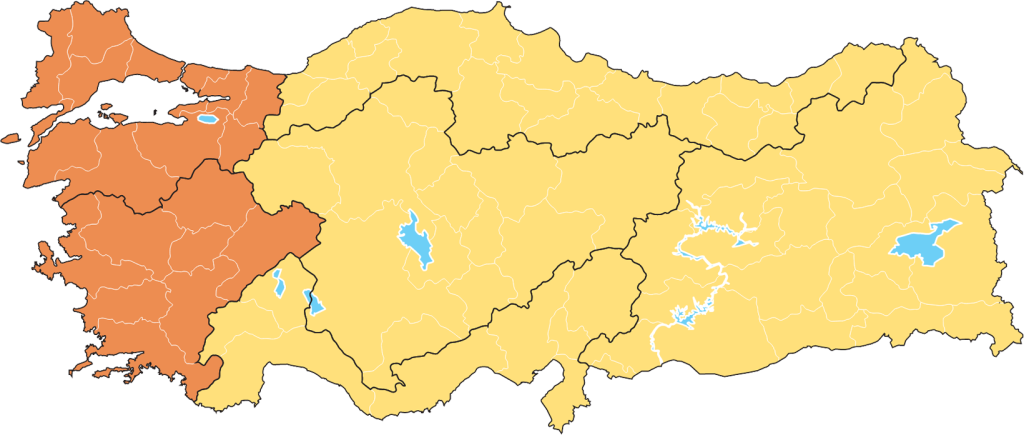

Mycotoxin contamination is not uniformly distributed across Türkiye. Depending on climatic and agricultural conditions, it may become dangerously concentrated in specific regions. The Türkiye Mycotoxin Risk Map published for Q1 2026 clearly shows that the centre of risk has shifted towards western Türkiye.
According to our analytical results, western Türkiye emerged as the area most vulnerable to mycotoxin pressure:
Q1 2026 data clearly show that mycotoxin risk cannot be explained by the presence of a single toxin alone. Instead, the actual field risk is shaped by combinations involving the co-occurrence of multiple mycotoxins.

Based on the results, at least two mycotoxins were detected concurrently in 70% of samples:
This may allow low-level mycotoxins to combine and cause greater-than-expected biological damage through additive or synergistic effects.
In the complex risk landscape of 2026, the following strategic approaches should be considered for effective mycotoxin management:
Through its in-depth analytical and interpretive capabilities, MYCOTRACE® does more than identify the current risk. It also evaluates the operation-specific risk profile and supports the development of appropriate management strategies. This approach provides operations with a decision-support model for measurable efficiency, sustainable animal production and more controlled risk management.
Contact our expert team to analyse your operation’s risk profile and develop a tailored “Holistic Protection Protocol”.
Let's get in touch to help you find the right product.